Air pollution has become a silent daily exposure. Whether you live in a city, near traffic, around construction, or even in a small town affected by seasonal burning, polluted air finds its way into your lungs without you realizing it.
And the damage does not start suddenly — it starts quietly, with small changes in the way your throat feels, how you breathe, how tired you get, and how often you fall sick.
The good news is:
Your body can protect itself amazingly well when you support it with natural remedies, better habits, and simple home strategies.
This guide explains how to recognize early symptoms, what you can do at home to reduce exposure, and the best natural ways to support your lung health.
1. How to Know You’re Being Exposed to Air Pollution
Most people believe that only “visible smog” refers to pollution. But your body gives you early warnings long before you see haze.
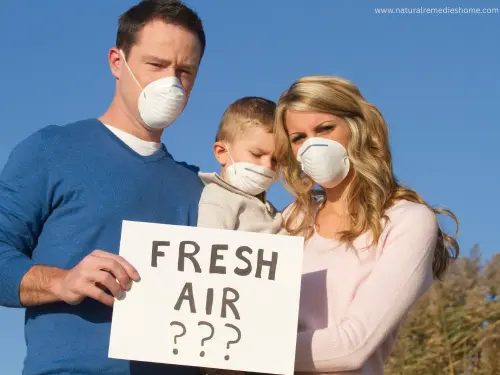
Signs your environment has polluted air
- Dust accumulates quickly in your home
- You feel a burning smell during traffic hours
- The sky looks dull or slightly hazy
- Your throat gets dry after being outdoors
- You cough more in the mornings or at night
- Your symptoms improve when you travel out of the city
If these symptoms occur frequently, you are likely breathing polluted air.
2. Early Symptoms of Air Pollution Exposure
These are the first signs your lungs and airways are irritated.
Respiratory signs
- Mild cough that comes and goes
- Throat dryness or burning
- Wheezing when you take a deep breath
- Nasal blockage without a cold
- More mucus or phlegm
- Chest tightness after outdoor exposure
Eyes and nose symptoms
- Burning eyes
- Watering
- Sneezing without a cold
- Irritation inside the nostrils
General body symptoms
- Headache (especially forehead or temples)
- Unexplained fatigue
- Daytime sleepiness
- Difficulty concentrating
- Feeling unusually tired after going outdoors
In children
- Nose rubbing
- Dry cough while playing
- Irritability
- Frequent “minor colds.”
- Reduced appetite
If these symptoms reduce when you stay indoors or visit a cleaner area, air pollution is the cause.
3. What Air Pollution Does Inside Your Body (Simple Explanation)
Polluted air contains PM2.5, PM10, smoke, chemicals, and gases.
When inhaled:
- These tiny particles enter your airway lining
- They cause oxidative stress (cell damage)
- Lungs react by producing inflammation + mucus
- Breathing becomes heavier
- Immunity in the respiratory tract weakens
This increases the risk of:
- Bronchitis
- Allergies
- Asthma flare-ups
- Heart stress in the long term
However, with the right daily habits, you can significantly reduce this harm.
4. Home Options to Reduce Pollution Effects (Non-medicine, Non-yoga)
These are simple, practical, zero-medicine strategies you can start today.
A. Clean Your Indoor Air Naturally
✔ 1. Wet mopping daily
Sweeping spreads PM2.5 back into the air. Wet mopping reduces it.
✔ 2. Keep a bowl of water + rock salt
Absorbs dust and airborne particles. Replace every 3 days.
✔ 3. Activated charcoal bowls
Natural purifier for odors and toxins.
✔ 4. Keep shoes outside
Shoes bring in dust and chemicals.
✔ 5. Use exhaust fans while cooking
Cooking smoke adds indoor PM2.5.
B. The Best Natural Air-Purifying Plants
(Place 1–2 plants per room)
- Snake Plant
- Areca Palm
- Spider Plant
- Peace Lily
- Money Plant
These absorb toxins and freshen the air.
C. Clean Air Timing at Home
- Keep windows closed during peak pollution:
Morning 6–11 am & evening 5–10 pm - Ventilate between 2–4 pm (cleaner air time)
- Avoid incense, scented candles, and aerosol sprays
- Wash curtains, bedsheets, and sofa covers regularly
D. Simple Lung-Support Remedies (Non-medicine)
✔ Warm water sipping
Keeps throat moist and reduces irritation.
✔ Steam inhalation (plain water)
Loosens pollutants trapped in the nostrils & throat.
✔ Honey + warm water
Soothes throat lining and reduces cough.
✔ Onion + honey mix
Traditional remedy for airway irritation.
5. Air Purifiers: Do You Need One? How to Choose
Not everyone needs an air purifier, but in areas with high pollution, it can make a noticeable difference.
When You Should Consider an Air Purifier
- AQI above 150
- Dust settles quickly at home
- Kids develop frequent throat issues
- You live near traffic, burning waste, or construction
- You wake up with irritation or dryness
What an Air Purifier Can Remove
- PM2.5 and PM10
- Smoke particles
- Allergens
- Dust
- Some odors (if a carbon filter is included)
What It Cannot Remove
- CO₂
- Humidity
- Very large areas
- Pollution if windows are open
The Only Type Worth Buying
✔ True HEPA (H13 or H14)
Removes 99.97% fine particles.
Avoid:
- HEPA-type
- HEPA-like
- Ionizers (release ozone)
How to Choose the Right Purifier
- Choose 20–30% higher room size capacity
- Look for CADR rating (higher = faster cleaning)
- Check filter replacement cost
- Choose low noise for bedrooms
- Avoid machines with ozone generation
Placement Tips
- Bedroom first
- 1–2 feet from any wall
- Keep doors/windows closed
- Clean the pre-filter weekly
6. Best Natural Remedies to Protect Lungs
Now, let’s come to herbs and supplements that truly support the lungs.
a. Tulsi (Holy Basil)
Reduces inflammation and protects the respiratory lining.
How to use: Tulsi tea or 4–6 leaves daily.
b. Turmeric + Black Pepper
Curcumin reduces oxidative stress from pollution.
Best: Golden milk or turmeric tea.
c. Ginger
Improves airflow and reduces mucus.
How to use: Ginger tea, raw slices in hot water.
d. Mulethi (Licorice Root)
Soothes throat and airway.
Caution: Avoid in uncontrolled BP.
e. Mullein Leaf
A known herb for lung cleansing.
Use: Tea made from dried leaves.
f. Spirulina
Strong antioxidant that reduces pollutant damage.
g. Vitamin C–rich foods
Boosts immunity and reduces inflammation.
Include lemon, oranges, and gooseberries.
h. NAC (N-Acetylcysteine)
Helps thin mucus and protects the lungs.
Useful during pollution peaks.
(Should be used after a doctor’s guidance in chronic cases.)
9. Yoga poses for lungs
Yoga breathing poses help a lot in detoxicfication and strengthening of lungs. Some of the prominent ones are
- Nadishodha or alternative nostril breathe.
- Breath of fire or kapalabhati.
These two yoga poses help
- Clear the lungs,
- Enhance their capacity,
- Optimize the respiratory rate
10. Foods That Support and Detox Lungs
Add these foods daily:
- Garlic and onions
- Berries
- Citrus fruits
- Carrots and sweet potatoes
- Dark leafy greens
- Green tea
- Flaxseeds or walnuts (omega-3)
- Broccoli, cabbage
- Turmeric-based drinks
These reduce inflammation and improve lung resilience.
11. Protecting Children from Air Pollution
Children breathe faster and absorb more pollutants per minute.
Simple protection steps
- Keep windows closed during peak hours
- Use steam inhalation when irritated
- Give warm water frequently
- Avoid outdoor play during early morning and evening
- Keep school bags dust-free
- Make them wear a mask on high-AQI days
12. Elderly, Asthma, COPD – Extra Care Tips
- Keep an air purifier in their bedroom
- Use steam inhalation 1–2 times a day
- Take warm water regularly
- Avoid incense and strong odors
- Regularly check inhaler technique
- Avoid evening outdoor walks when pollution peaks
13. When to Seek Medical Help
Visit a doctor if you or your child has:
- Persistent cough > 2 weeks
- Breathlessness
- Wheezing
- Chest pain
- Fever
- Blueish lips or difficulty speaking in full sentences
11. Frequently Asked Questions and Answers
Can lungs detox naturally?
Yes. With rest, clean air, antioxidants, and hydration, lungs slowly repair themselves.
Do masks really help?
Yes — N95 masks filter PM2.5 effectively.
What is the fastest home remedy?
Steam inhalation, warm water, and avoiding exposure.
What is the best food for lung detox?
Garlic, turmeric, citrus fruits, berries, and green tea.
Conclusion
You cannot control the air outside, but you can control how your lungs respond to it.
Simple steps — such as cleaning indoor air, avoiding peak exposure, using steam inhalation, warm water, tulsi, turmeric, ginger, and antioxidants, and selecting the right air purifier — can significantly reduce the damage caused by polluted air.
Your lungs repair every single day.
Give them the support they deserve.
